



Published July 2026
For pediatric patients with asthma, risk education should focus on helping families recognize triggers, identify poor control early, use controller therapy appropriately, and follow a written asthma action plan.
The National Heart, Lung, and Blood Institute notes that children are at higher risk for worsening symptoms with viral infections, allergens, and smoke exposure, and recommend trigger avoidance, medication adherence, and sharing the child’s asthma action plan with school staff and caregivers.
At each visit, focus on these key steps
- Review common triggers, especially smoke, allergens, and respiratory infections
- Assess symptom frequency and nighttime cough
- Confirm proper inhaler and spacer technique
- Check for overreliance on rescue medication
- Make sure the family has an up-to-date asthma action plan, with a copy sent to the child’s school
Asthma education can support stronger performance on pediatric quality measures by helping reduce preventable flare-ups, emergency department use, and overreliance on rescue medication.
This support can help children stay healthier, avoid serious asthma flare-ups, and spend more time in school and everyday activities.
Accurate Coding
Accurate coding also plays an important role in supporting pediatric asthma care. When asthma severity, symptoms, and treatment are documented and coded correctly, it helps ensure children are identified for appropriate follow-up, supports reliable quality measurement, and gives a clearer picture of the care they need over time.
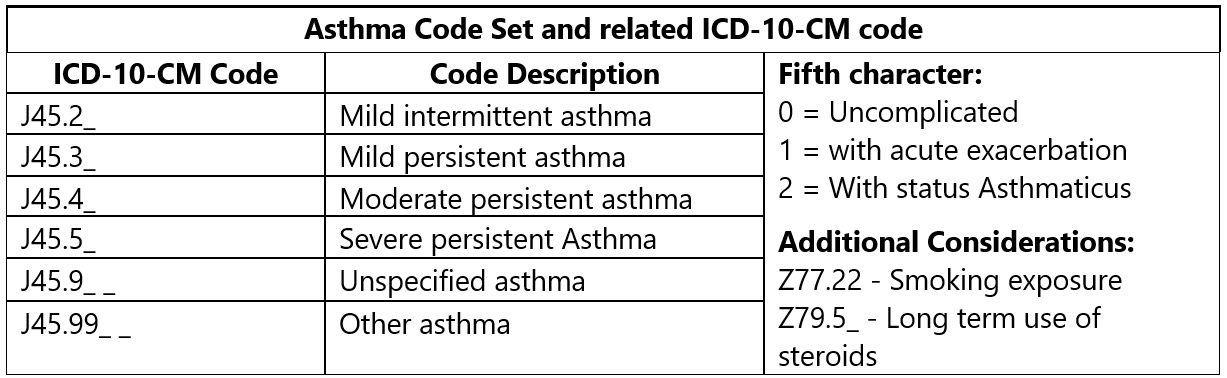
Common Documentation Opportunities
- Missing severity classification
- No exacerbation status documented
- Lack of current assessment at follow-up
- Use of unspecified asthma when more detail is available
Key Takeaway
Asthma documentation should fully support diagnosis, severity, and management at each encounter to ensure accurate representation of the patient’s condition.
Closing Gaps in Care
Review other articles in this issue regarding closing gaps in care.