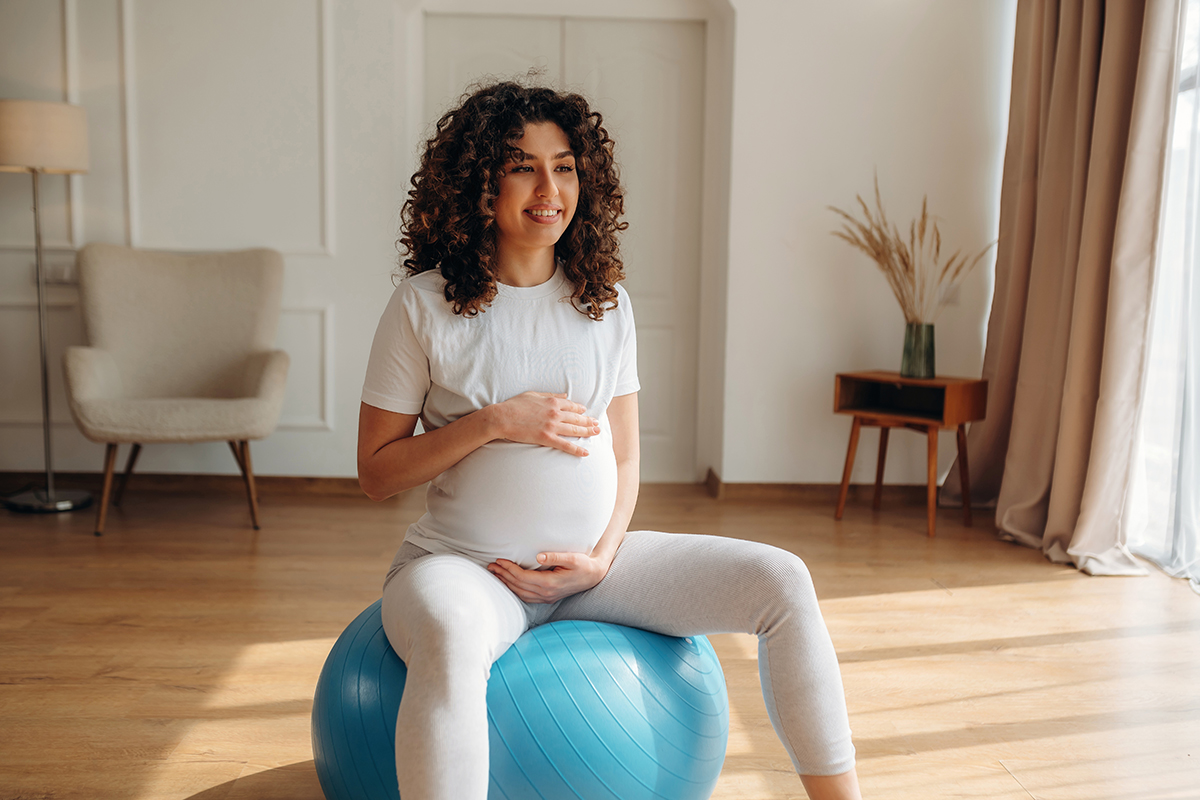
What the experts say about exercise during pregnancy1

The American College of Obstetrics and Gynecologist (ACOG) recommends staying physically active before, during and after pregnancy when there are no complications.

Build Strength and Endurance

Combine aerobic and strength-conditioning exercises to improve or maintain physical fitness, support mental and emotional health, help with weight management, and reduce the risk of gestational diabetes and preeclampsia.

Aim for 150 Minutes Each Week

Work toward at least 150 minutes of moderate-intensity aerobic activity spread across most, if not all, days of the week.

Tip: You can meet the 150‑minute goal by doing 30 minutes a day, 5 days a week, or by fitting in short 10‑minute movement breaks throughout the day.

Whether you are just starting or already active, you are in the right place

New to Exercise

Start out slowly and gradually increase activity, beginning with as little as 5 minutes a day. Add 5 minutes each week until you can stay active for 30 minutes a day.

Already active

Continue your regular physical activity as long as you remain healthy and check in with your doctor for guidance on how and when activity should be adjusted as your pregnancy progresses.

Outdated Advice You Might Hear

You may still hear these myths:


  • Keep your heart rate under 140 bpm.
    This was an old ACOG guideline from 1985, removed in 1994. Heart rate is not a reliable measure because pregnancy changes your resting heart rate. Instead, use how you feel; you should be able to talk but not sing during exercise.

  • Do Kegels all the time.
    While pelvic floor strength matters, constant squeezing without relaxation can cause tension. Balance contraction and relaxation.

  • Don’t lift more than 20 lbs.
    No evidence supports this blanket rule. Lifting with good form is safe for most healthy pregnancies.

  • Avoid all exercise after the first trimester.
    Current guidance encourages continuing or starting safe activity throughout pregnancy.

General Guidelines for Prenatal Exercise:

  • Before you begin, please take a moment to read the MVP Fitness Disclaimer
  • Always talk to a doctor before beginning or changing an exercise program
  • Most forms of exercise are safe, in particular: walking, swimming, stationary cycling, and aerobics (especially low impact or water-based), resistance exercises. Talk with your doctor about which activities are safe for you and which ones you should avoid
  • Avoid brisk exercise in hot, humid weather
  • Wear comfortable clothing and a supportive, well-fitting bra
  • Drink plenty of water and consume adequate calories daily

What to Expect at Each Stage

  • Welcome to the First Trimester

    The first trimester is an exciting and sometimes overwhelming time filled with new information as your mind and body begin to adjust to pregnancy. Our goal is to provide you with the essential guidance and support you need to confidently and safely incorporate exercise into your weekly routine.

    During this stage, you may experience uncomfortable symptoms, and the last thing you might feel like doing is getting up and moving. But here’s the good news: exercise can actually help ease many of those early pregnancy challenges!

    Why Movement Matters Right Now

    Exercise has been consistently shown to help manage many common first trimester symptoms4:

    • Supports digestion: Movement can gently massage the intestines, helping food move along the digestive pathway more comfortably and releasing trapped air, reducing gas and constipation.
    • Improves circulation: Physical activity increases our heart rate, sending more blood to the brain and helping reduce feelings of dizziness.
    • Supports better sleep: Regular movement improves sleep quality, which may help combat the fatigue often experienced in early pregnancy.
    • Boosts mood: Exercise releases endorphins that can help improve mood and reduce stress during a time of significant physical and emotional change.

    Bonus: Exercising outside in fresh air can be especially helpful for settling a queasy stomach.

    Activity Guidelines

    Let's recap the Physical Activity Recommendation: ACOG recommends at least 150 minutes of moderate-intensity activity per week, spread over most days (for people with no medical complications).1

    Moderate intensity exercise is when you're out of breath but not breathless. Using the Talk Test is a great way to measure how intensely you're exercising You should be able to talk comfortably while working out and avoid exercising to the exhaustion.5

    We definitely want to work towards this recommendation, but don't stress - it doesn’t need to happen immediately. For this trimester, we're going to go over what's most important.

    Building Your Foundation

    The most important thing you can do for your body this trimester and is to learn and practice proper posture.

    This is ideal for the first trimester because your body likely hasn't begun changing too much yet. By focusing on good posture now, you can set yourself up for success in later trimesters when your center of gravity shifts, belly grows and spine begins to curve. So, what does proper posture look like?

    • neutral spine
    • shoulders down and back
    • transverse abdominals engaged
    • head properly aligned over the neck

    Exercises for This Trimester

    We’ll now break down the recommended exercises for this trimester, including what they are, where they target, why they matter, and how to perform them.

    Safety Considerations

    Since safety is our main priority, we encourage you to follow these general guidelines:

    • All exercises should be performed with good posture
    • Stretch only within a comfortable, normal range of motion during pregnancy to avoid overstretching. During pregnancy, the body produces more relaxin, a hormone that loosens joints and connective tissue in preparation for birth. Because relaxin increases flexibility, pregnant individuals may stretch too far without realizing it, so gentle, controlled movements are recommended.
    • Listen to your body and exercise at an appropriate level for yourself, based on your previous level of physical activity and how you are feeling each day.

    Additional Resources

    Looking for more information? Visit the American College of Obstetricians and Gynecologists website on Exercise During Pregnancy.

  • Welcome to the Second Trimester

    Don't worry if you weren't able to dive into exercise in the first trimester. Energy levels rise in the second trimester and many of those uncomfortable side effects tend to subside, making it easier to get moving.

    The good news is that ACOG recommends exercise for pregnant women even if they didn't work out pre-pregnancy, and creating healthy exercise habits now have a higher likelihood of sticking - even beyond pregnancy!

    Why Movement Matters Right Now6

    Exercising during pregnancy improves placenta function, which is responsible for getting oxygen and nutrients to your growing baby. During exercise, your body moves blood away from your baby acting as a 'good stress' that makes babies work harder to get what they need, but don't worry, this is not harming your baby, it's actually benefitting them! Research has found that your baby will get more blood and nutrients during rest time, resulting in more overall blood and nutrients to the babies of people who exercise.

    Preparing Your Body for What's Ahead

    The second trimester is filled with growth - for your baby and your bump. As your body takes on additional weight, it can cause changes to your posture and put strain on the pelvic floor and abdominal muscles. Strengthening your body now can reduce muscle strain and better prepare you for labor and delivery.

    By the third trimester, you'll be navigating exercise with a bigger bump, so learning proper exercise techniques now will help ensure you are able to perform them properly throughout the rest of pregnancy.

    Lastly, parenthood is accompanied by a new level of closeness - where you go your baby goes! Building up strength now will help your body adjust to caring for your baby.

    Exercises for This Trimester

    Now let's jump into what we're going to focus on this trimester.

    Safety Considerations

    • If you're experiencing heartburn, avoid performing exercises on your back and instead do a modified version sitting or standing.
    • If you experience Round Ligament Pain, a sharp pain between your hip and pubic bone, while exercising, focus on engaging your abs and keep hips and shoulders aligned to avoid twisting, as this can worsen the pain. If the pain doesn't subside, talk to your doctor.

    Additional Resources

    Looking for more information? Visit the American College of Obstetricians and Gynecologists website on Exercise During Pregnancy.

  • Welcome to the Third Trimester

    Whether you’ve been moving with Mama Moves from the very beginning or you’re just joining us now, we’re so glad you’re here.

    Why Movement Matters Right Now

    You’ve entered the homestretch of your pregnancy, and meeting your baby is just around the corner. While this stage is full of excitement, it can also bring some big mental, emotional, and physical changes. Good news is that staying active during the third trimester, right up until delivery, can be a powerful way to support both your mind and body!

    • Ease common physical discomforts like back pain, swelling, poor circulation, and posture challenges
    • Help you feel more positive and confident about yourself, your pregnancy, and your upcoming labor and delivery8,9

    Exercise can also set you up for delivery day success with research showing that people who exercise during pregnancy often have shorter, easier labors, and recover more quickly postpartum.10,11

    After delivery (vaginal or C‑section), having strong legs can make it much easier to move around, care for your baby, and give your abdominal muscles the time they need to rest and heal.

    Moving with Purpose

    This trimester, we’re using movement as a tool to ease aches and pains, prepare for labor, and set yourself up for a smooth recovery after birth.

    Exercises for This Trimester

    Common Changes and Exercise Adjustments

    • You might not be able to see your feet anymore.
      As your belly grows, you might not be able to see your feet or the floor in front of you anymore. To stay safe, it’s a good idea to avoid activities with quick changes in speed or direction. If you’re in an aerobics class and can’t clearly see your feet anymore, feel free to skip the step and keep your movement grounded.
    • Your belly is getting bigger (and heavier!).
      With that growth comes more stretch through the belly muscles. To help protect your core, limit repetitive use of your obliques, the muscles on the sides of your belly. Instead, focus on gently engaging those deep belly muscles by “hugging the baby” and supporting your core from the inside out.
    • Breathing might feel harder than it used to.
      As baby takes up more space, your lungs have less room to expand, which can lead to feeling short of breath. This is completely normal. Be sure to pace yourself, take regular water breaks, and listen to your body. Inhaling through your nose and exhaling through your mouth can help keep your breathing more comfortable and controlled during exercise.
    • Posture Reminder
      Your baby grows a lot during the last weeks of pregnancy, which can make posture harder to keep. Try checking in with your posture throughout the day, you might set a reminder or do a quick check every hour. Each time you stand up, gently “hug your baby” by lifting and drawing your abdominal muscles in to help support your body.

    Special Considerations

    • Feeling Achy or Swollen? Try Water Exercise
      If you’re dealing with swelling, wrist or hand tingling, back or pelvic pain, or varicose veins, water‑based exercise can be a great option. Moving in water helps take pressure off your joints and pelvis, eases sore muscles, and can reduce back discomfort.13 The water helps you feel lighter and more comfortable, even late in pregnancy, and it’s safe for beginners at any stage.
    • Gestational Diabetes? Movement Can Help
      If you’ve been diagnosed with gestational diabetes, staying active can make a difference. Regular movement can help manage stress and support healthy blood sugar levels. Be sure to talk with your health care provider about what types of activity are best and safe for you during pregnancy.
  • Preparing for Life After Birth

    You’re getting close to welcoming your baby, and while birth is the main focus right now, the weeks after delivery matter too. The postpartum period brings big physical, emotional, and mental changes, and knowing what to expect can help you feel more prepared and confident.

    The good news is that gentle movement, when the time comes and when it feels right for you, can be a helpful tool to support healing, rebuild strength, and boost how you feel after birth. Learning about this now gives you a chance to plan ahead and set realistic, pressure‑free expectations.

    Why Movement Matters After Delivery14

    Research shows that returning to exercise after birth can support both physical and emotional well-being:

    • Gentle movement can help boost your mood, reduce stress, and improve energy levels
    • Strengthens your ab muscles and can help you lose extra weight gained during pregnancy
    • Exercise is also linked to lower rates of postpartum depression, a common mood condition after birth that can involve ongoing feelings of sadness, anxiety, or being overwhelmed 14,15,16

    Planning for Success

    Now is a good time to start thinking ahead about what movement might look like for you after delivery. Consider what kind of routine could work, what support you may need, and what barriers might get in the way. Having a simple plan in place can make getting started feel more manageable.

    Our Motivating Action Plan resource is available to help you think this through. No pressure, just preparation.

    When Can I Start Moving Again?

    According to the American College of Obstetricians and Gynecologists (ACOG), if you had a healthy pregnancy and a vaginal birth, you can usually begin gentle activity a few days after your baby is born, or whenever you feel ready. If you had a cesarean birth or complications, check with your health care provider before starting exercise as there is usually a 6-week recovery period.

    ACOG recommends staying active for 20-30 minutes, but even as little as 10 minutes of exercise a day can benefit your body.14

    Pregnancy and birth put a lot of stress on the abdominal muscles and pelvic floor. While some people are told to avoid exercise for the first 4–8 weeks after delivery, gently engaging these muscles soon after birth can actually support healing. This is different from intense exercise; it’s about helping your body reconnect and recover.

    TIP: Schedule your postpartum appointment before birth, if possible, so that you have it on the calendar.
    This visit is usually anywhere from two to six weeks after delivery, depending on the circumstances. It gives you time with your doctor to check-in on how your body and mind are adjusting to parenthood and get the all-clear to safely return to exercise.

    Exercises for Early Recovery

    If you feel ready and think movement will help you feel better, you can start with a few gentle exercises that support recovery during the first six weeks after birth:

    What Gentle Movement Should Feel Like

    Listen to your body first

    This guidance is general as every postpartum recovery looks different. A helpful question to ask yourself is: “Will this help me feel better today?” The first six weeks after birth are about healing and adjusting, so if light movement feels good, that’s great! If it feels like too much, it’s okay to wait. Your priority will be recovery, not adding stress to an already full plate. If movement doesn’t feel helpful one day, pause and check in with yourself another day.

    We use a tool called the Rate of Perceived Exertion (RPE) which simply means: how hard does this feel to you right now?

    Imagine a scale from 1 to 10:

    • 1 is extremely easy with minimal to no effort
    • 10 is the hardest effort you can imagine

    During postpartum recovery, movement should feel like about a 3 or 4 out of 10 at most. That means:

    • You’re breathing comfortably
    • You could still hold a conversation
    • You feel gently challenged, not strained

    If something feels harder than that, it’s okay to slow down, take a break, or stop. This phase is about healing and reconnecting with your body, not pushing through, so take it slow and listen to your body.

    Recovery Considerations

    As your body recovers from pregnancy and birth, it’s normal for exercise to feel different. If you experience any of the symptoms below, don't worry, they are common and often improve as your body continues to heal.

    • Bladder leaks (such as leaking when you cough, sneeze, or move), which can be normal for up to a few months after delivery
    • Full or uncomfortable breasts, particularly if you are breastfeeding
    • Feeling more out of shape than expected, often due to fatigue, sleep loss, and recovery, not just fitness level
    • Weak abdominal muscles, which may show up as lower back discomfort

    If you notice any of the following, it’s a good idea to stop exercising and check in with your doctor:

    • Breastfeeding suddenly feels more difficult right after exercise
    • Postpartum bleeding becomes heavier or turns pink or red after activity

    Emotional Well-Being and Support

    Know the Signs of Postpartum Depression and Available Support

    As you get closer to welcoming your baby, it can be helpful to learn about the emotional changes that sometimes happen after birth. Knowing what's normal the weeks following delivery and when to reach out can help you feel more prepared.

    Many new parents experience the baby blues in the first couple of weeks after birth, which may include mood swings, tearfulness, or feeling overwhelmed, and it often improves on its own. If these feelings last longer than two weeks, don’t start to improve, or feel like they’re getting worse, it’s important to contact your doctor. Postpartum depression and anxiety are common, and help is available.

    Postpartum recovery isn’t about rushing back or “bouncing back.” It’s about listening to your body, moving with care, and giving yourself grace as you heal, one day at a time.

    Helpful Steps to Take Now

    Helpful steps to take now and after baby arrives:

    • Review the signs and symptoms of postpartum depression and anxiety ahead of time, and share them with your partner, family, or close friends so they can help watch for changes.
    • Know where you can find support, whether it be your doctor, doula, or MVP Care Manager, if you need them. It can be helpful to keep contact numbers in an easily accessible place, like on your fridge or in your phone.
      • MVP Care Managers are available to talk through concerns, ask questions, or prepare for a conversation with your doctor. For support, call MVP at 1‑866‑942‑7966.
    • Schedule your postpartum visit and plan to talk openly with your doctor; they want to know how you’re really doing. It can help to jot down how you’re feeling day to day so you can share specific concerns or changes at your appointment.

    Learning about this now is not meant to worry you but help you be prepared and supported. You are not alone, and asking for help is a strong and important step in caring for yourself and your baby.

  • Welcome to Parenthood!

    As you settle into a new routine of taking care of your baby, be sure to find time to take care of yourself as well.

    Why Movement Matters Right Now

    Exercising is a great form of self-care during the postpartum period and comes with a ton of benefits:14,15,16

    • Supports better sleep, boosts your mood, reduces stress, and improves energy levels
    • Strengthens your ab muscles and can help you lose extra weight gained during pregnancy
    • Linked to lower rates of postpartum depression, a common mood condition after birth that can involve ongoing feelings of sadness, anxiety, or overwhelm

    Getting Cleared to Exercise

    At your postpartum visit with your doctor, make sure you get permission from your doctor to begin exercising again.

    This visit is usually anywhere from two to six weeks after delivery, depending on the circumstances. It gives you time with your doctor to check-in on how your body and mind are adjusting to parenthood and get the all-clear to safely return to exercise.

    Once you are cleared by your doctor and your body feels ready, you can ease back into exercise. You might notice your muscles feel weaker after delivery. Don't worry, this is very normal during the postpartum period. Recovery from a c-section tends to take longer to heal than a vaginal delivery. Most women are cleared to return to exercise at six weeks postpartum, but everyone's body heals differently, so it is important to listen to yours and only return if you feel physically ready to.

    Rebuilding Strength Safely

    Beginning exercise after pregnancy14

    Start out with 10-20 minutes a day doing simple exercises, like the ones listed below. As you feel comfortable, gradually add in moderate-intensity exercises up to 150 minutes per week. This can be broken down however you'd like: 30 minute works 5 days, or 10 minute sessions each day of the week.


    What's moderate intensity aerobic activity?

    • Your heart rate is increasing and you're sweating
    • You can talk normally but you cannot sing
    • Activities include fast walking and riding a bike

    Exercises for This Stage

    Making Movement Work for You

    If it feels hard to fit in exercise on your own, try a mommy and me class. Exercising with your baby can make it easier to stay active and comes with extra benefits:

    • You’re more likely to stick with a routine
    • You may feel less guilt about leaving your baby with a caregiver
    • You can pause to feed your baby or meet their needs during class
    • It gives you a chance to get out of the house and do something for yourself while bonding with your baby
    • It helps you connect with other moms and build community

    Visit MVP's Events Calendar to find a postpartum fitness class near you.

    Using Your Birth Ball Beyond Birth

    Your birthing ball can still be useful after delivery. With your baby, you can gently rock them or use the ball during tummy time for comfort and movement. On your own, the ball can be used to support exercise, either making movements easier or more challenging, especially when rebuilding core strength.

    Safety Considerations

    Guidelines for exercising postpartum:3

    • Do not exercise if you're bleeding, in pain or have mastitis or any other type of infection.
    • Be cautious if anything feels uncomfortable or different than it did when you exercised before you were pregnant.
a pregnant woman stands in a kitchen drinking a glass of juice through a straw

We Want To Hear From You

Enjoying the program? Provide your feedback.

Questions? Contact livingwellprograms@mvphealthcare.com.

Sources

  1. The American College of Obstetricians and Gynecologists (ACOG). (2025, November). FAQ: Exercise during pregnancy.
  2. Barakat R, Franco E, Perales M, López C, Mottola MF. Exercise during pregnancy is associated with a shorter duration of labor. A randomized clinical trial. Eur J Obstet Gynecol Reprod Biol. 2018 May;224:33-40. doi: 10.1016/j.ejogrb.2018.03.009. Epub 2018 Mar 6. PMID: 29529475.
  3. Clapp, James F. and Catherine Cram. Exercising Through Your Pregnancy. 2nd ed. Omaha, Neb., Addicus Books, 2012.
  4. Polman R, Kaiseler M, Borkoles E. Effect of a single bout of exercise on the mood of pregnant women. J Sports Med Phys Fitness. 2007 Mar;47(1):103-11. PMID: 17369806.
  5. ProNatal Fitness. (2025, Ocotber 10). What's a Safe Intensity to Work at During Pregnancy?
  6. Clapp JF, et al. Am J Obstet Gynecol. 2002; 186:142-147, Exercise During Pregnancy: What is the Effect on the Placenta?
  7. Kinsella SM, Lohmann G. Supine hypotensive syndrome. Obstet Gynecol. 1994 May;83(5 Pt 1):774-88. PMID: 8164943.
  8. Clapp JF, Kim H, Burciu B, Schmidt S, Petry K, Lopez B. Continuing regular exercise during pregnancy: effect of exercise volume on fetoplacental growth. Am J Obstet Gynecol. 2002;186(1):142–7.
  9. Beetham, K.S., Giles, C., Noetel, M. et al. The effects of vigorous intensity exercise in the third trimester of pregnancy: a systematic review and meta-analysis. BMC Pregnancy Childbirth 19, 281 (2019).  https://doi.org/10.1186/s12884-019-2441-1
  10. Clapp JF 3rd, Little KD. Effect of recreational exercise on pregnancy weight gain and subcutaneous fat deposition. Med Sci Sports Exerc. 1995 Feb;27(2):170-7. PMID: 7723638.
  11. Exercising Through Your Pregnancy (Clapp & Cram 2012) - Clapp, J. F., & Cram, C. (2012). Exercising Through Your Pregnancy. Omaha, NB: Addicus Books.
  12. Chiarello, Cynthia & Falzone, Laura & McCaslin, Kristin & Patel, Mita & Ulery, Kristen. (2005). The Effects of an Exercise Program on Diastasis Recti Abdominis in Pregnant Women. Journal of Women’s Health Physical Therapy. 29. 11–16. 10.1097/01274882-200529010-00003.
  13. Baciuk, E.P., Pereira, R.I., Cecatti, J.G. et al. Water aerobics in pregnancy: cardiovascular response, labor and neonatal outcomes . Reprod Health 5, 10 (2008). 
  14. The American College of Obstetricians and Gynecologists (ACOG). (2024, October). FAQ: Exercise after pregnancy.
  15. Marconcin P, Peralta M, Gouveia ÉR, Ferrari G, Carraça E, Ihle A, Marques A. Effects of Exercise during Pregnancy on Postpartum Depression: A Systematic Review of Meta-Analyses. Biology (Basel). 2021 Dec 15;10(12):1331. doi: 10.3390/biology10121331. PMID: 34943246; PMCID: PMC8698776.
  16. Poyatos-León, R, García-Hermoso, A, Sanabria-Martínez, G, Álvarez-Bueno, C, Cavero-Redondo, I, Martínez-Vizcaíno, V. Effects of exercise-based interventions on postpartum depression: A meta-analysis of randomized controlled trials. Birth. 2017; 44: 200- 208. 
  17. National Health Service UK. (2025, December). Keeping Fit and Healthy with a Baby.
  18. The American College of Obstetricians and Gynecologists (ACOG). (2020, March 26).  Physical activity and exercise during pregnancy and the postpartum period.
  19. Oh Baby! Fitness. 3 Exercises for First Six Weeks.
  20. The American College of Obstetricians and Gynecologists (ACOG). (2024, May). Exercises After Pregnancy: 5 Exercises You Can Do at Home.

MVP Fitness Program Disclaimer

Exercise provides different benefits for different people, and it is important to know your own body and limits. Please consult your health care provider with any questions or concerns before starting any exercise program to determine if it is right for your needs and general health condition. This is particularly true if you (or your family) have a history of high blood pressure or heart disease, or if you have ever experienced chest pain when exercising or have experienced chest pain in the past month when not engaged in physical activity, if you smoke, have high cholesterol, are obese, or have a bone or joint problem that could be made worse by a change in physical activity. Do not start this exercise program if your physician or health care provider advises against it. If you experience faintness, dizziness, pain or shortness of breath at any time while exercising you should stop immediately. When participating in any exercise or exercise program, there is the possibility of physical injury even when the exercise program is offered in a virtual manner and/or the participant is engaging in a virtual manner. Not all exercises in the videos are suitable for all persons. If you are in the United States and think you are having a medical or health emergency, call your health care professional, or 911, immediately.

You should not rely on the information in this exercise program as a substitute for, nor does it replace, professional medical advice, diagnosis, or treatment. If you have any concerns or questions about your health, you should always consult with a physician or other health-care professional. Any information provided as part of the exercise program is solely at your own risk. In consideration for the ability to participate in these free exercise programs, you hereby agree to indemnify, defend and hold MVP Health Plan, Inc., its affiliates, subsidiaries, officers, directors, members, employees, personnel and agents (collectively “MVP”) harmless from and against any claim, action, loss, liability, damage, cost or expense, of any nature whatsoever, including without limitation, attorneys fees and other legal costs.

You agree that neither the creators of this video nor MVP are liable for any injury, accident, or health impairment that may result by your viewing and/or participating any of these exercise programs (or utilizing the techniques suggested in this video) and the content, information and videos are made available for informational purposes only. Neither the creators of this video nor MVP are licensed health care provider(s) and neither has any expertise in diagnosing, examining, or treating medical conditions of any kind, or in determining the effect of any specific exercise on a medical condition. Neither the creators of this video nor MVP make any representations or warranties with regards to the completeness of information in this video or any linked websites, classes, books, videos, apps, or other products represented herein.

No copyright infringement is intended by MVP. MVP is a nonprofit exempt organization and believes in good faith that the display of this video constitutes fair use of the video.