



Understand what cholesterol is, and how everyday habits can help keep it in a healthy range.
Cholesterol may not be something you think about every day, but it plays a key role in your overall health. It is a waxy, fat-like substance your body uses to build cells and make hormones. But when cholesterol levels get too high, it can quietly raise your risk for heart disease.
Types of Cholesterol
| HDL | LDL | |
|---|---|---|
| Known as | “Good” cholesterol | “Bad” cholesterol |
| Why is it called that? | Removes “bad” cholesterol from your bloodstream. High levels can protect against heart disease. | Can build up in your arteries over time, making it harder for blood to flow. High levels can lead to heart disease. |
| Goal levels | MEN: Greater than 40 mg/dL WOMEN: Greater than 50 mg/dL |
Less than 100 mg/dL |
| Total cholesterol goal | Less than 200 mg/dL Cholesterol goals are not one-size-fits-all. Your doctor will tell you your goal based on your age, cardiovascular risk, and other health considerations. |
|
| How it’s checked | A blood test called a lipid panel checks your cholesterol. Your doctor will tell you when, or how often, your cholesterol should be checked. | |
| If cholesterol is too high | High cholesterol can put you at risk for heart disease, or even heart attack or stroke. You can have high cholesterol for a long time and not know it. | |
Achieving Healthy Levels
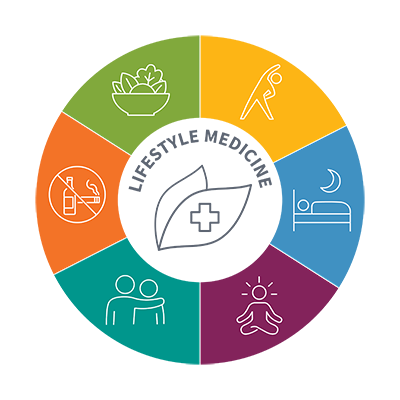
Adopting Lifestyle Medicine pillars can help keep your cholesterol at a healthy level.
Incorporate more of these into your daily routine:
- Fresh fruits and vegetables
- Whole grains like oats, brown rice, and whole wheat bread
- Lean proteins, like chicken, fish, beans, and nuts
- Movement you enjoy—aim for at least 150 minutes of moderate intensity aerobic activity per week
Try to limit:
- Heavily processed foods
- Foods high in saturated fats, like full-fat dairy and fatty meats
- Sugary drinks and added sugars
- Tobacco use
Reviewed and edited for clinical accuracy by MVP Medical Director Maria Karipidis Pouria, MD, FACP, CAQ-SM, FAAP.