



Prioritizing Self-Care to Ease Pain
Lower back pain is one of the most common aches of modern life, often showing up at the worst possible moments. It can interrupt your workday, steal your sleep, and turn simple tasks into frustrating challenges. But it’s also your body’s way of saying something needs attention. Maybe it’s stress. Maybe it’s posture. Maybe your body just needs more movement. The good news is, a few mindful habits and gentle stretches can make a real difference, help ease discomfort, and restore balance.
Self-Care Starts Now
Red Flags That Mean It’s Time to See a Doctor
- Loss of bladder or bowel control—medical emergency
- Pain that persists or worsens after a few weeks
- Numbness, tingling, or weakness in your legs or feet
- Personal history of cancer, osteoporosis, or immune suppression
- Severe night pain
- Recent trauma (like a fall or injury)
- Fever, chills, or signs of infection
- Unexplained weight loss
Stretches for Relief
Aim for 15 minutes of stretching per day.
Don’t forget! Talk to your doctor or physical therapist about activities that are right for you.
Knee-to-Chest Stretch
Lie on your back with your knees bent and your feet flat on the floor.
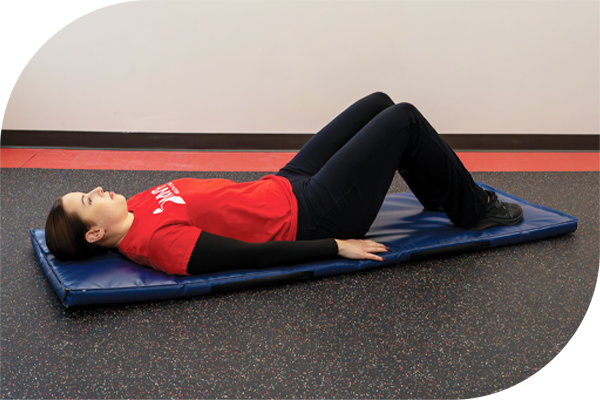
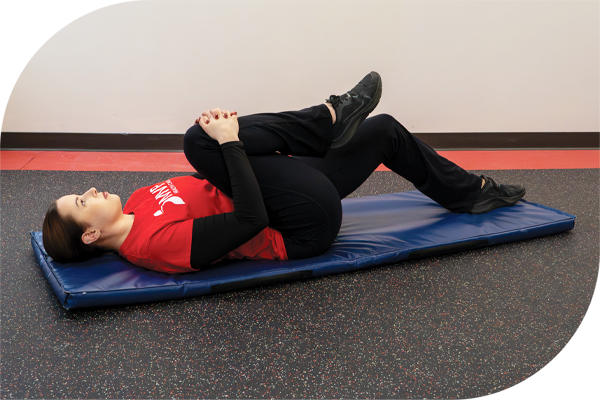
Using both hands, pull up one knee and press it toward your chest. Tighten the muscles in your belly and press your spine to the floor. Hold for five seconds.
Return to the starting position and repeat with the other leg. Go back to the starting position, then repeat with both legs at the same time.
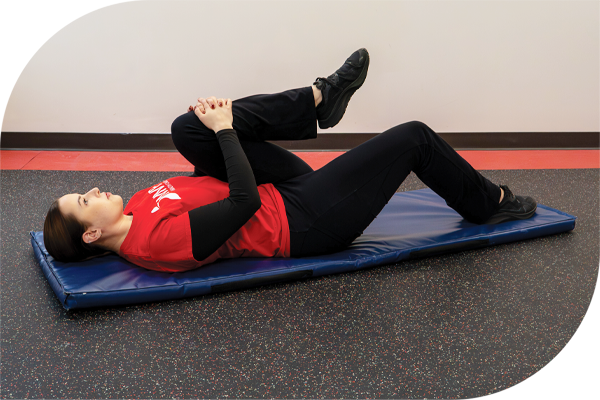
Do this stretch two to three times on each side, twice a day.
Seated Lower Back Rotational Stretch
Sit on an armless chair or on a stool. Cross your right leg over your left leg.
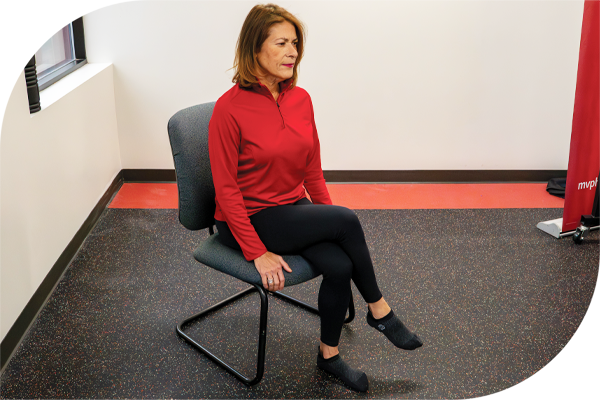
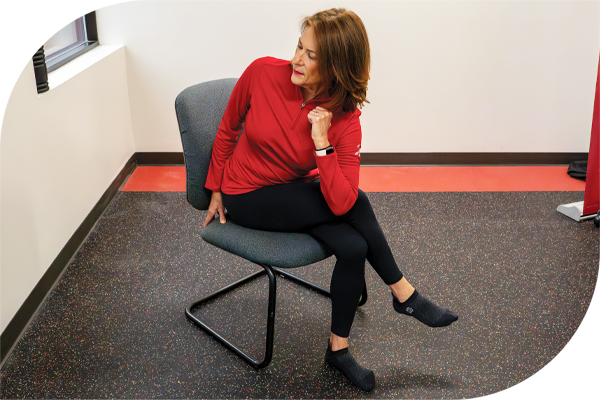
Bracing your left elbow against the outside of your right knee, twist and stretch to the side.
Hold for 10 seconds. Repeat on the opposite side.
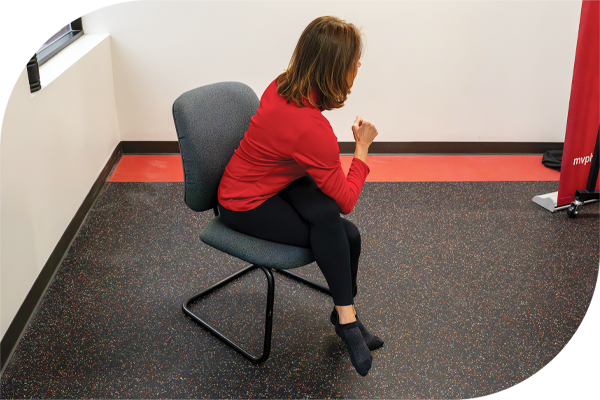
Do this stretch three to five times on each side, twice a day.
Lower Back Rotational Stretch
Lie on your back with your knees bent and your feet flat on the floor.
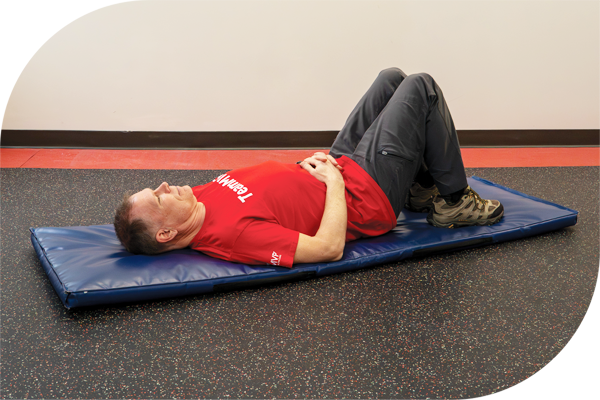
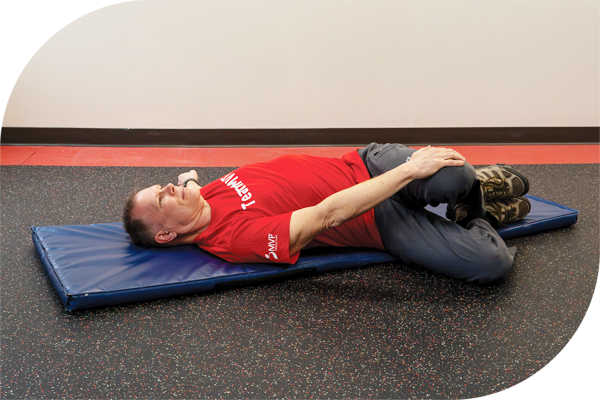
Keep your shoulders firmly on the floor and slowly roll your bent knees to one side. Hold for five to 10 seconds. Slowly go back to the starting position, then repeat on the other side.
Do this stretch two to three times on each side, twice a day.